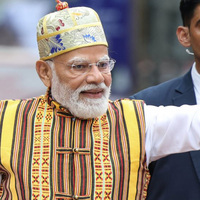


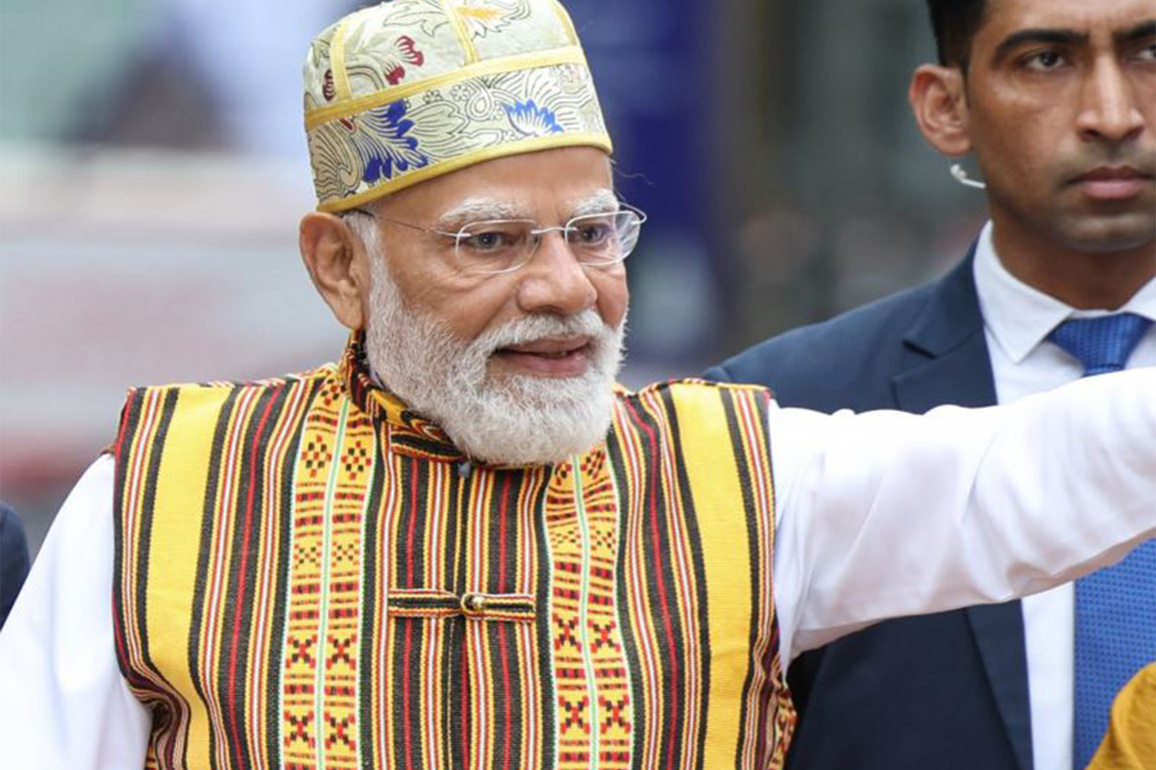
New Delhi [India], June 10 (ANI): M. Venkaiah Naidu writes in The Indian Express that Narendra Modi became the elected PM with the longest continuous tenure, 4,399 days in office, surpassing Nehru's record. Concurrently, Karan Singh notes in The Business Standard states, India witnesses a notable moment in its democratic journey as Mr Modi becomes the longest-serving Prime Minister in the nation's history in terms of continuous tenure, having completed more uninterrupted days in office than any of his predecessors.
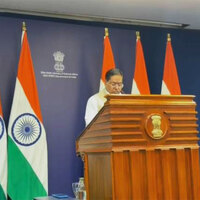
Naidu states that Independent India has seen 15 prime ministers from Jawaharlal Nehru to Narendra Damodardas Modi, who served the country in different socio-political and economic scenarios, addressing a variety of challenges to the best of their abilities.
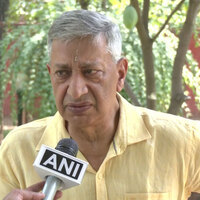
Singh reflects on his own long career in public life since Independence, recalling that he served in Mrs Indira Gandhi's Cabinet for 10 years and witnessed both her greatest triumph in the creation of Bangladesh and her darkest hour during the Emergency.
Singh notes that Pandit Jawaharlal Nehru was his mentor, who inherited a wounded civilisation emerging from colonialism, poverty, partition, and communal slaughter, and whose great achievement was to transform a vast and diverse subcontinent into a functioning democratic republic.
Singh noted, 'The country's population had grown from about 340 million to nearly 1.46 billion, while the electorate had expanded from about 110 million voters to over 830 million.' In this massive modern democracy, Singh emphasises that leading a party to three consecutive parliamentary victories is itself a remarkable political accomplishment. Naidu asserts that this achievement is deeply significant because it comes in an era of unprecedented political competition, coalition dynamics, 24-hour media scrutiny, and the rise of social media-driven public discourse.
M. Venkaiah Naidu underscores that Modi was born to parents of modest means and worked as a tea vendor in Vadnagar, Gujarat, assisting his father. Naidu notes that travelling from there to the PM's office in South Block in the national capital is an extraordinary achievement born of a journey of self-realisation, understanding Bharat, its people, and their problems.
Naidu shares that Modi's mind was primarily shaped by his early association with the RSS, where he quietly went about discharging assigned duties at various levels, acquiring immense organisational abilities, clarity of thought, and the courage to dream of India's destiny. Naidu records that at age 51, Modi became the youngest Chief Minister of Gujarat, embarking on an unbroken 13-year tenure as CM, where the 'Gujarat model' captured the imagination of the country.
Naidu stated, 'Modi's philosophy is 'Sabka Saath, Sabka Vikas, Sabka Vishwas'.' He further noted, 'PM Modi believes that Bharat's trans-formation can't be realised without the people's participation. Swachh Bharat was made into a people's movement with the construction of over 12 crore individual household toilets. Over 4 crore houses were built for the poor, and over 57 crore bank accounts were opened under JAM, enabling 45 lakh crore to be transferred to beneficiaries under DBT.
Naidu also points out that LPG connections for over 10 crore women have rescued them from toiling in kitchens while inhaling smoke. Furthering this welfare picture, Karan Singh writes that under Mr Modi, India's social welfare initiatives, including rural electrification, housing programmes for the poor, solar energy initiatives, and food-security measures benefiting hundreds of millions of citizens, have significantly impacted the lives of ordinary Indians. Singh confirms that under Modi, India has remained among the fastest-growing major economies in the world, sustaining strong growth despite the disruptions caused by the Covid-19 pandemic, global inflationary pressures, geopolitical conflicts, and supply-chain disruptions.
Karan Singh highlights that the rapid expansion of highways, airports, railway modernisation, digital connectivity, and public infrastructure has sought to lay the foundations for long-term economic growth under Modi.
M. Venkaiah Naidu illustrates this digital leap by noting that over 24,000 crore digital transactions through UPI made India the global leader in real-time digital payments. Naidu adds that 80 crore people got food support during the Covid-19 pandemic and continue to get it. In terms of developing human capital, Singh notes that the number of IITs, AIIMS, and Indian Institutes of Management (IIMs) has increased substantially under Modi.
Naidu corroborates that Modi pioneered human resource development with a massive expansion in educational and health institutions, noting that IITs, IIMs, and AIIMS have increased manifold across the country. Naidu further highlights that Ayushman Bharat has become the world's largest publicly funded health programme.
On matters of governance style and statecraft, Naidu writes that PM Modi does not believe in stereotypes and firmly rejects appeasement. Naidu states that the abrogation of Article 370, the abolition of triple talaq, the introduction of GST reforms against much opposition, and the 33 per cent reservation for women in Parliament and state assemblies are clear pointers of this stance.
Singh observes that some of Modi's decisions have undoubtedly been controversial, including demonetisation and the abrogation of Article 370, and points out that in a democracy, major policy initiatives will always evoke strong opinions on both sides. Singh also comments that although the word secularism is included in the preamble of the Constitution, it has unfortunately come to acquire an anti-Hindu complex, making the construction of the Shri Ram Lalla Temple in Ayodhya, following the Supreme Court's historic judgment, a resolution of a long-standing civilizational and cultural issue for millions of Indians.
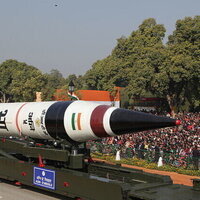
M. Venkaiah Naidu argues that Modi has left an indelible impression on internal and national security, stating that left-wing extremism is almost wiped out, while surgical strikes and Operation Sindoor taught effective lessons to those casting an evil eye on India. In foreign policy, Naidu writes that Modi made it clear that India will only be aligned with national interests and not individual countries, ensuring the voice of Bharat now matters at all global dialogue tables.
Singh pointed out, 'His extensive international engagements have strengthened India's relations with major powers as well as countries across the developing world. India's growing diplomatic profile, leadership role in the Global South, and enhanced visibility in international forums have increased its stature on the world stage.' (ANI)